

When you book an underarms wax service, the primary goal is smooth, hair-free skin, but the experience often feels uncertain because results depend heavily on timing, hair growth cycles, and product compatibility. Many customers notice that their underarms look visible again within a week, which creates confusion about whether the service was performed correctly. This visibility concern is a common reason people hesitate before rebooking or trying a different salon. The issue is rarely about the technician's skill alone, but more about how your skin reacts and how your hair growth cycle aligns with the service date. Understanding this before you book helps you decide whether to stick with your current provider or explore other options for better outcomes.
What Service Visibility Means During a Salon Visit
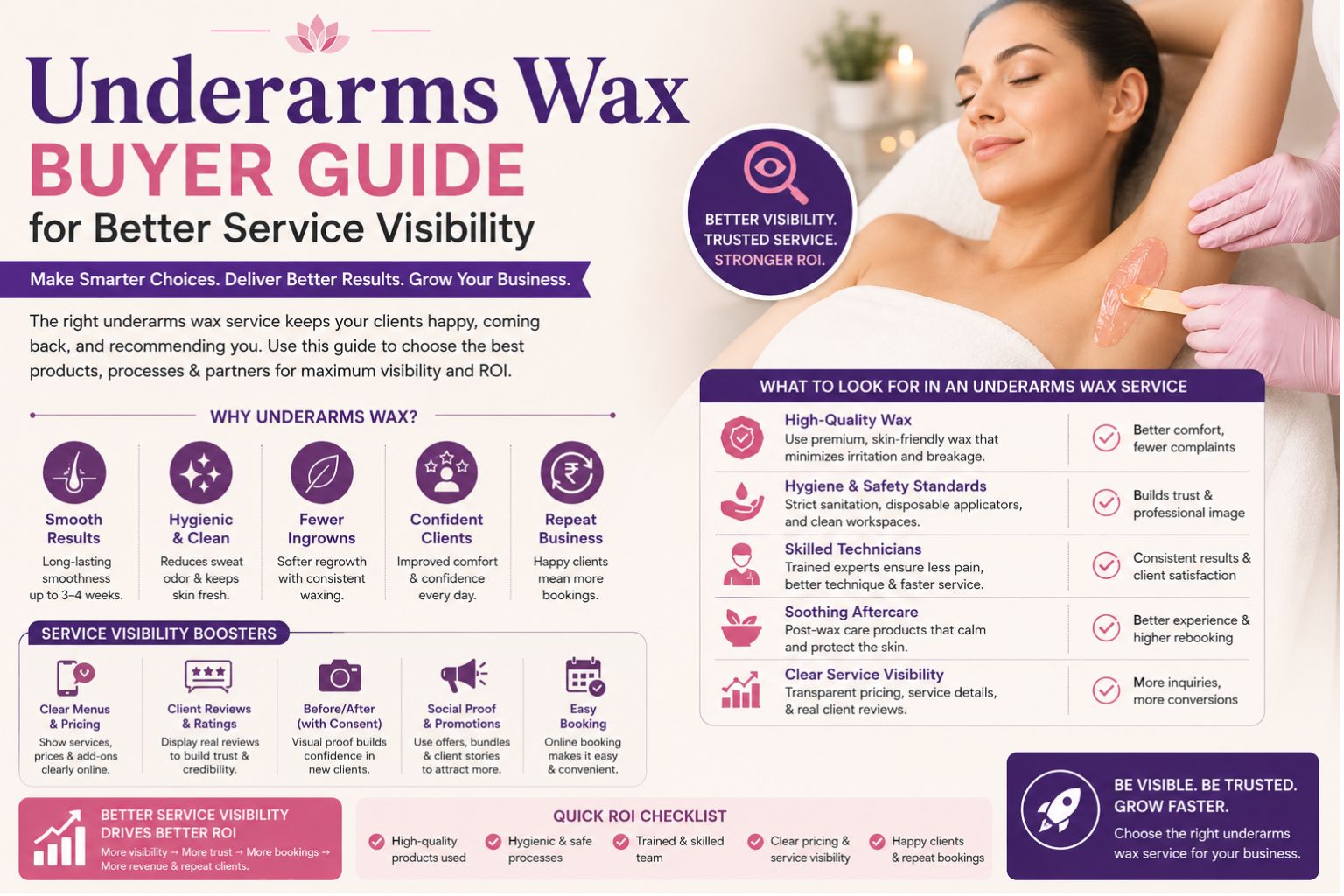
Service visibility refers to how long the results of a treatment remain noticeable and how clearly the outcome reflects the effort put in by the salon. For underarms waxing, this often translates into whether any stray hairs are left behind or if the area looks uniformly smooth immediately after the session. Customers typically check their underarms right after waxing, expecting a clean appearance that lasts for a couple of weeks. However, if your hair growth cycle is shorter or if the wax used does not grip finer hairs effectively, you may notice regrowth sooner than expected. This situation makes the service seem less effective, even though the procedure was performed correctly, and it often leads to dissatisfaction that is directed at the salon rather than at individual skin characteristics.
Another layer of visibility involves how sensitive your underarm skin is during the service. Redness, bumps, or a burning sensation can temporarily make the area look worse before it looks better, which confuses first-time clients who expect immediate perfection. This temporary reaction is a realistic salon observation because exfoliation and hair removal always stress the skin to some degree. In many cases, the visible irritation fades within a few hours, but the initial appearance can be alarming. Knowing that this is a common response helps you evaluate the service fairly rather than assuming the wax was too harsh or the technician made an error. This clarity is essential for deciding whether your experience falls within normal limits or requires a follow-up consultation.
What Actually Happens on Underarm Skin and Why Results Vary
Underarm skin is thinner and more sensitive than skin on your legs or arms, and it also has a higher concentration of sweat glands and hair follicles that sit closer to the surface. This anatomical difference means that waxing here creates more friction and requires a firmer hold to remove hair from the root, which can increase the likelihood of redness and minor breakouts. Additionally, hair thickness varies widely among individuals, and coarse hair often responds better to waxing then fine, sparse hair that may break off during removal. This breakage leaves a visible stubble that mimics regrowth, leading you to believe the treatment did not last. This is a common observation in Indian salons where clientele have diverse hair textures and waxing protocols are not always adjusted for individual needs.
The timing of your appointment relative to your hair growth cycle also significantly influences perceived results. Waxing removes hair from the root, so visible regrowth depends on how quickly your follicles cycle back to the growth phase, which can take anywhere from two to four weeks. If you wax too early after shaving, the hair may not be long enough for the wax to grip properly, leading to patchy results and a quicker return of visible hair. Conversely, if you wait too long between sessions, the hair becomes denser and more noticeable, making the service seem like it is not managing regrowth effectively. Therefore, the outcome you see in the mirror is often a reflection of your scheduling habits rather than a failure of the treatment itself.
Wrong Assumptions and Blind Spots That Lead to Dissatisfaction
One major misconception is that waxing will permanently reduce hair growth after a few sessions, but in reality, results are temporary and heavily dependent on your hormonal balance and genetics. Expecting permanent reduction after one or two appointments sets you up for disappointment because the root is removed, but the follicle remains active and will produce new hair. Another blind spot involves product compatibility; some individuals react to certain waxing resins or the pre- and post-waxing lotions used by the salon. If your skin develops a rash or intense itching, it is natural to blame the salon's hygiene, but the cause is often an allergy to a specific ingredient. This reaction creates a negative experience signal that may be misattributed to poor service quality, leading to unnecessary conflict or a decision to stop waxing altogether.
Additionally, many customers neglect the importance of pre-service care, such as ensuring the underarm area is clean and free from deodorant or sweat buildup. Deodorant residue creates a barrier that prevents the wax from adhering correctly to the hair, causing the wax to slip and leaving patchy areas behind. This overlooked detail is a frequent source of dissatisfaction, but it is entirely preventable. When you arrive with freshly applied deodorant and hydrate with heavy creams, you compromise the adhesion and increase the chance of skin lifting or bruising. The salon may not always remind you about these prep rules, so taking personal responsibility for preparation is critical to achieving the service visibility you desire and avoiding the frustration of uneven hair removal.
How to Decide Timing, Maintenance, and Whether to Switch Services
To get the most out of your underarms waxing, you should assess your hair growth cycle and schedule appointments based on a consistent interval rather than waiting until the hair becomes highly visible. Waxing every three to four weeks is often sufficient for maintaining smoothness, but this frequency may need adjustment based on your hormonal changes or seasonal factors like humidity, which can accelerate regrowth. If you find that hair appears within a week, you should not assume the service failed; instead, consider whether you are nearing a phase of rapid growth or whether the wax failed to remove the hair from the root. Reassessing your home care routine, such as exfoliating gently two days before the appointment, often improves the outcome more than changing salons abruptly.
However, there are boundary conditions where you should consider switching to another treatment entirely. If your skin consistently shows severe reactions like intense burning, prolonged redness lasting more than 48 hours, or recurring pigmentation, continuing with wax might not be safe despite potential cosmetic benefits. In such cases, methods like laser hair reduction or electric trimming might be more suitable for your skin type, even if they require a higher upfront investment. Additionally, if you have a compromised skin barrier due to excessive use of chemical exfoliants you should pause waxing until the skin recovers. This decision boundary is critical because prioritizing skin health over cosmetic smoothness aligns with long-term satisfaction. Reading through salon FAQs and beauty service questions can also clarify what realistic expectations you should have before booking.
Ultimately, professional reassessment becomes necessary when you cannot identify the cause of your dissatisfaction, whether it is the result duration, the level of pain, or the skin aftermath. A consultation with an experienced beautician can help you determine if your hair type is suited for waxing or if alternative methods offer better visibility. It is also worth checking parlor time resources to understand how others in your situation handle maintenance pressure. Therefore, your final decision should be based on a mix of your skin's tolerance, your tolerance for upkeep, and the realistic outcomes you expect from a temporary hair removal method. Remember that waxing is not a permanent solution, so framing your expectations around maintenance rather than elimination will reduce your anxiety and increase your satisfaction with every visit.
Frequently Asked Questions
-
q Is underarm waxing supposed to be very painful
a Pain intensity varies widely based on your pain threshold, hair thickness, and the sensitivity of your skin on that specific day.
-
q How long should underarms stay smooth after waxing
a Smoothness typically lasts for two to four weeks, but your individual hair growth cycle dictates exactly when regrowth becomes visible.
-
q Can I use deodorant right after waxing my underarms
a It is best to avoid deodorant for at least 24 hours to prevent irritation, blocked pores, and potential stinging on freshly waxed skin.
-
q Why do I get dark bumps under my arms after waxing
a Bumps often develop when hair gets trapped under the skin or when a post-wax product triggers a reaction in sensitive follicles.
-
q How often should I wax my underarms for best results
a Waxing every three to four weeks aligns well with the typical hair growth cycle and helps maintain consistent smoothness without excessive sensitivity.
-
q Wart on hair growth reduce if I wax underarms regularly
a Regular waxing can cause hair to become finer over time, but hormonal changes can still produce a natural return of normal regrowth.
-
q What happens if I wax underarms that already have ingrown hairs
a Waxing over ingrown hairs can loosen them but might also cause significant breakage or skin trauma if the hair is not ready for extraction.
-
q Is a patch test necessary before a full underarm wax session
a A patch test is highly recommended for first-time clients to check skin compatibility and prevent a severe allergic reaction to the wax formula.