

If you have ever stepped out of a salon in Delhi or Mumbai after a facial, you probably layered on sunscreen before leaving. But a week later, you noticed uneven tanning or a patchy glow, even though you applied SPF 50 every day — religiously. That is exactly when you start asking what is photostable sunscreen, because the cream you used broke down under the sun, leaving your skin exposed and your salon results wasted. I mean, you paid for the glow, right?
What Photostability Means for Your Daily Sunscreen
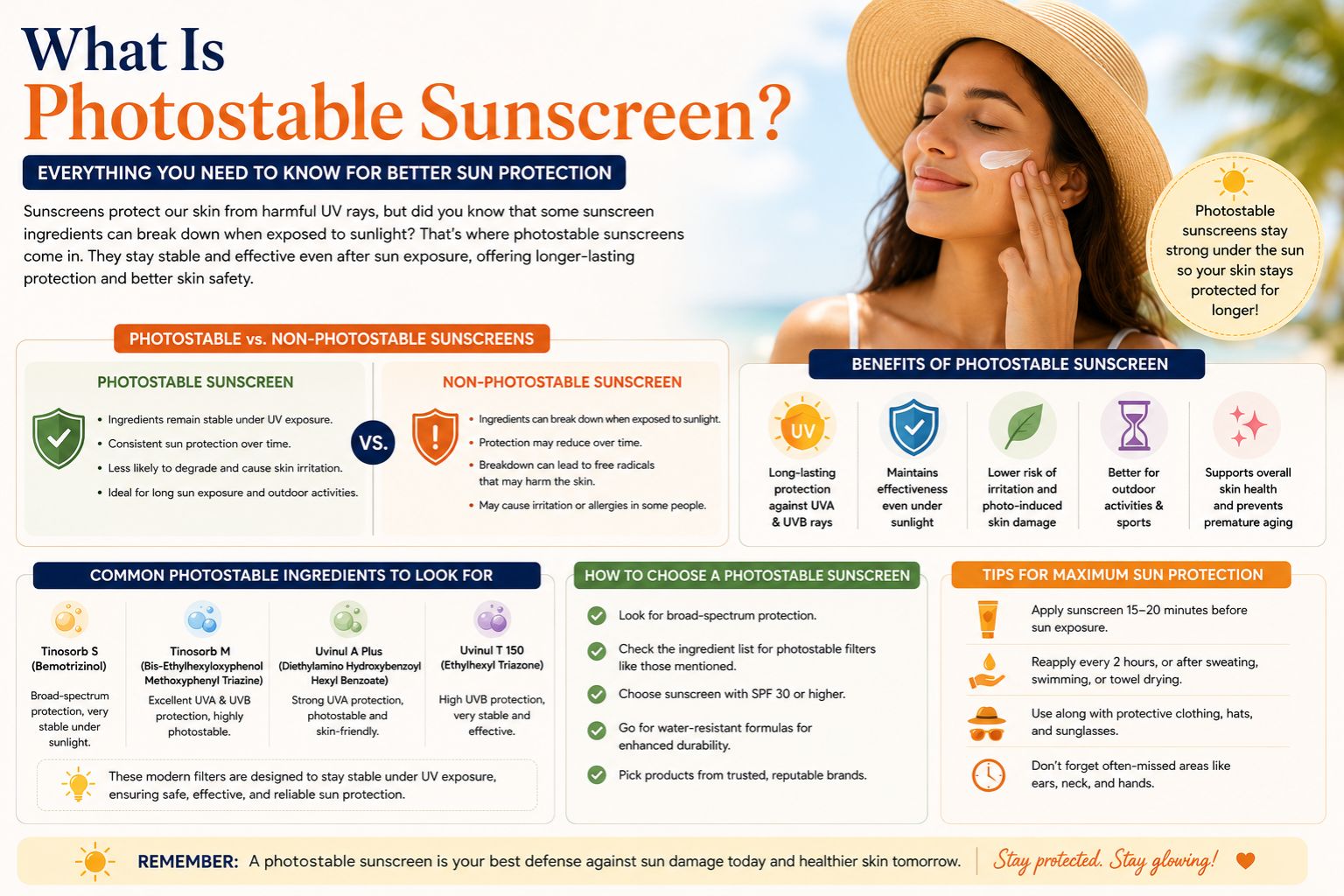
Photostable sunscreen simply means the active ingredients in the tube do not degrade or lose their protective power when exposed to sunlight. Many popular sunscreens contain chemical filters like avobenzone that can break down within thirty minutes of sun exposure — sometimes even faster in this heat — turning ineffective and sometimes even causing skin irritation. A photostable formula keeps its UV-blocking ability intact for hours, which is why dermatologists and experienced salon experts now recommend checking for stabilizers like octocrylene before buying any product. Honestly, who has time to reapply every half hour?
Why Sunscreen Instability Affects Indian Skin More Than You Think
In India, where humidity and intense UV levels are the norm, an unstable sunscreen becomes a liability rather than protection. Many clients at local salons complain of a burning sensation or redness after applying a new sunscreen post-treatment. I've heard this so many times from friends too. This happens because degraded chemical filters can penetrate deeper into sensitized skin, triggering reactions. A photostable sunscreen prevents this breakdown, meaning your post-facial glow actually lasts through your commute instead of turning into a blotchy, irritated patch by noon. Nobody wants that surprise.
The Mistake Most People Overlook When Picking Sunscreen for Salon Visits
The most common misunderstanding is believing that a high SPF number alone guarantees full-day protection. You might apply a creamy SPF 60 before your bridal appointment, but without photostability, that shield shatters within the first hour of outdoor photography. A non-obvious detail most people miss is that sunscreens with purely physical blockers like zinc oxide are naturally photostable but can leave a white cast on Indian skin tones — and let's be real, that ghost look isn't cute — while chemical blends require specific stabilizing ingredients. Knowing this boundary helps you avoid wasting money on a product that stops working before your event even starts.
How to Decide the Right Sunscreen for Your Schedule and Skin Type
When you are booking a salon facial or a hair smoothening session, factor in your post-treatment sun exposure. If you have a wedding event later in the day, you need a photostable sunscreen that survives the afternoon heat without reapplication anxiety. For skin care routines involving retinoids or exfoliation, a stable UV filter becomes even more critical because your skin barrier is temporarily compromised. Platforms like parlourtime can help you find salons that understand these product nuances, ensuring your service investment does not get undone by a sunscreen that falls apart under the sun. That's just throwing money away.
FAQ
q What is the difference between photostable and non-photostable sunscreen?
a Photostable sunscreen keeps its UV protection active for longer under sunlight, while non-photostable formulas degrade quickly, leading to reduced efficacy and potential skin irritation.
q Can photostable sunscreen cause skin reactions on sensitive skin?
a Photostable sunscreens are generally less likely to cause reactions because they do not break down into irritating byproducts, but individual sensitivities to specific filters can still occur. So patch test still matters.
q How long does photostable sunscreen last on Indian skin during outdoor events?
a A quality photostable sunscreen can provide effective protection for about two to three hours of direct sun exposure, after which reapplication is advised for sustained safety.
q Should I use photostable sunscreen after salon treatments like facials or chemical peels?
a Yes, after treatments that strip the skin barrier, using a photostable sunscreen is highly recommended to prevent sun damage and ensure your results are not compromised.