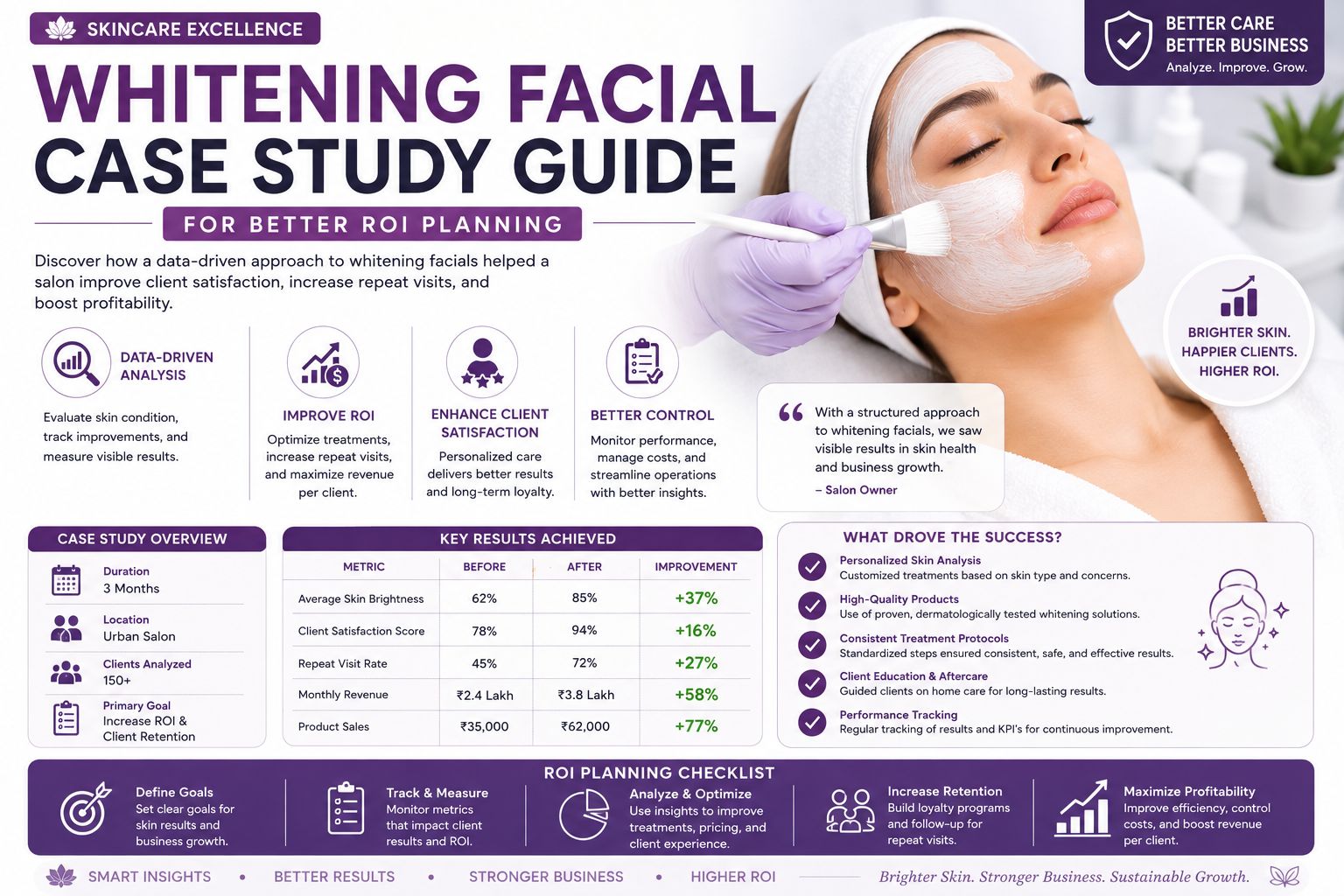


When clients search for a whitening facial case study guide for better ROI planning, they usually want to understand if the treatment is worth the money and time. The concern is rarely about the immediate glow after the service. It is more about whether that glow will last, whether the investment will feel justified, and how the results will compare with the price paid. Many customers book a whitening facial before an event or a wedding, expecting a visible transformation. The salon observation is that dissatisfaction typically begins when the brightening effect fades faster than expected or when the skin reacts with redness or tightness. The confusion starts because the initial look after the facial feels satisfying, but the maintenance reality does not match the promotional picture. This guide examines what actually happens after a whitening facial, why outcomes vary, and how both customers and salon owners can plan better for long-term satisfaction rather than just immediate visual impact.
What Clients Actually Expect From a Whitening Facial
The primary expectation for a whitening facial is a clearer, brighter, and more even skin tone. Customers notice the immediate radiance right after the service, often because of the massage, exfoliation, and the application of active brightening ingredients. The initial reaction is usually positive because the skin feels smoother and looks refreshed. However, the real test happens over the following days. The reality is that a whitening facial provides a temporary improvement in skin radiance, not a permanent change in skin color. Many clients confuse the treatment with a skin lightening procedure, which leads to disappointment when their natural complexion returns. The overlooked detail is that hydration and surface exfoliation create the visible glow, and once the skin sheds those superficial layers or loses moisture, the brightness naturally reduces. The decision pressure increases when clients have paid a significant amount and see the effect diminish within a week. The goal of a whitening facial is optimization of skin appearance, not alteration of natural skin tone. This distinction becomes the core of satisfaction for informed customers who understand that maintenance and skincare routines extend the visible benefits.
Factors That Influence Whitening Facial Results on Indian Skin
Indian skin reacts differently to whitening facials depending on the underlying skin type, sensitivity level, and climatic exposure. Clients with oily skin may notice a matte finish that lasts longer, while dry skin may experience tightness after the service. The results vary because the treatment includes exfoliation, which removes dead skin cells, and the new skin underneath is temporarily more vulnerable and sensitive. In many cases, customers notice that the brightening effect is prominent for the first two to three days and then gradually settles. The service dependency is significant because the home care routine after the facial determines how long the radiance lasts. A client who uses sunscreen regularly will retain the results better than someone who steps directly into the sun post-treatment. The salon observation is that seasonal changes also play a role. During humid months, the glow fades faster due to sweat and oil production, while winter dryness can make the results appear dull if moisturization is inadequate. The realistic expectation is that a whitening facial works as a preparatory step for events, not as a permanent solution. When clients understand that their regular skincare habits and follow-up visits determine the outcome, the dissatisfaction rate drops considerably.
Common Mistakes That Reduce the Value of a Whitening Facial
One frequent mistake is assuming that a single premium whitening facial will solve years of sun damage, pigmentation, or uneven tone. Another blind spot is using harsh home scrubs immediately after the professional treatment, which disrupts the skin barrier and causes redness. Clients also often skip sunscreen, assuming that the facial has created a protective layer. This misunderstanding leads to faster darkening and a feeling that the treatment failed. The overlooked condition is that active ingredients used in whitening facials can cause irritation if the client has undiagnosed sensitivity. Salon professionals commonly observe that clients with a history of allergic reactions do not always mention it before booking. The dissatisfaction escalates when the skin becomes patchy or develops temporary hyperpigmentation after the facial, which is a reaction to exfoliation rather than a flaw in the service itself. The risk section of this planning guide highlights that a successful whitening facial requires skin assessment, honest communication about medical history, and realistic goal setting before the service begins. The value of the treatment diminishes only when expectations are misaligned with what a cosmetic facial can reasonably achieve.
Decision Boundaries and Realistic ROI Considerations for Whitening Facials
Planning for a whitening facial should involve a clear decision about timing and purpose. If the goal is a pre-event glow, scheduling the facial two to three days before the occasion is often ideal because the skin settles and looks natural. Immediate preparation on the same day may leave the skin red or overexfoliated. The ROI improves when clients treat the whitening facial as part of a monthly skincare routine rather than a one-time fix. Once the initial brightening effect fades, additional sessions may be necessary to maintain the radiance, but the boundary appears when repeated facials no longer improve the skin condition. At that point, the issue is likely related to internal health, sun exposure habits, or the need for professional dermatological advice rather than another salon facial. The maintenance cost and effort should be considered upfront. Clients who are unwilling to invest in sunscreen, moisturizer, and regular follow-ups may not achieve the desired outcome and may feel their money was wasted. This guide better addresses ROI planning when it acknowledges the limitation of topical treatments. A whitening facial cannot reverse deep pigmentation or alter natural skin undertones, and expecting that will always lead to dissatisfaction. Parlourtime discussions often highlight that maintenance expectations influence satisfaction more than the treatment itself. By using resources like beauty guidance and comparing service timing through salon FAQs before booking, customers can make smarter choices. The decision should be based on skin condition, lifestyle, and budget, not just the promise of an instant transformation.
Whitening Facial Case Study FAQ
q Can a whitening facial permanently change my skin tone?
No, a whitening facial provides a temporary brightening effect that typically lasts a few days to a week.q How often should I get a whitening facial to see value for money?
A monthly schedule is often recommended, but the frequency depends on your skin type and maintenance routine.q Will my skin react negatively to a whitening facial?
Sensitive skin can react with redness or tightness, which is why a patch test and proper skin assessment are necessary.q Why does the glow from my facial fade so quickly?
The brightening effect is largely due to exfoliation and hydration, which reduces as the skin sheds or loses moisture.q Is a whitening facial the right choice for my skin concerns?
If you have deep pigmentation or medical skin conditions, a salon facial may not be sufficient, and a dermatologist should be consulted.q How many sessions are needed for noticeable long-term improvement?
Multiple sessions are usually required, but the visible difference diminishes if the underlying cause of dullness remains unaddressed.q What is the ideal timing for a facial before an event?
Scheduling the treatment two to three days before an event reduces the risk of visible redness and allows the skin to settle.q Does the cost of a facial justify the results in the long run?
Value depends on realistic expectations, proper aftercare, and whether the treatment is part of a consistent skincare plan.