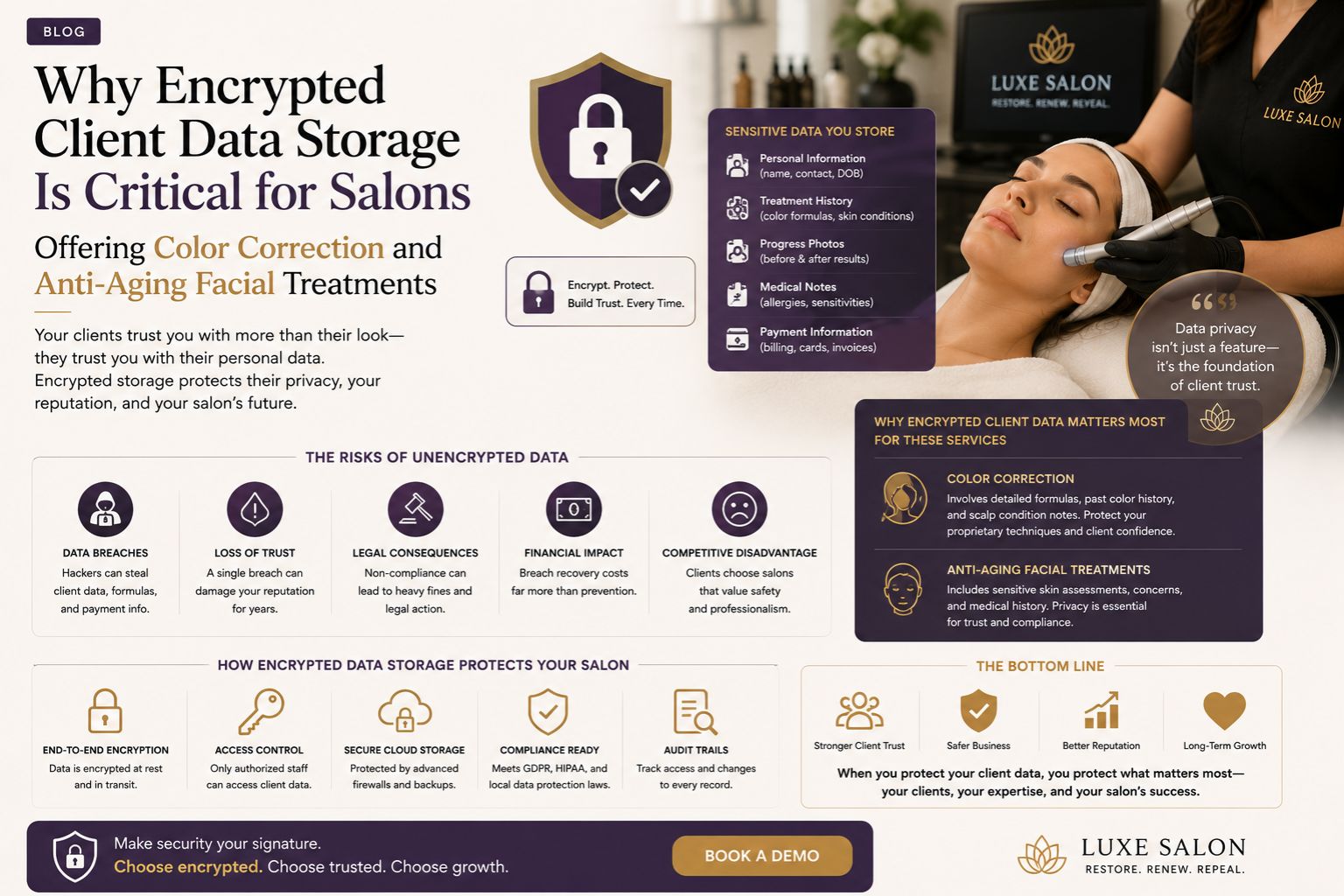


When you walk into a salon for a color correction or anti-aging facial treatment, you hand over far more than just your time—you share personal details like skin history, medical allergies, and treatment preferences. That's exactly why encrypted client data storage is critical for salons offering color correction and anti-aging facial treatments, because a single leak of this information can lead to identity theft or unwanted exposure. Many clients don't realize that their treatment records, including formulas used for color correction, become a permanent digital footprint; if a salon’s system is breached, those records could be sold or misused. A common salon observation is that staff often jot down notes on paper or use basic spreadsheets, which are far from secure. The non-obvious detail people overlook is that even a screenshot of a client’s anti-aging facial recipe stored on a personal phone can become a security vulnerability… and honestly, who hasn't seen a beautician snap a quick photo for "reference"?
What Encrypted Data Storage Means for Your Salon Visit
Encrypted data storage means that your personal information—like the exact shade mix for color correction or the serum sequence for an anti-aging facial—is scrambled into a code that only authorized devices can read, making it useless if stolen. For example, when a beautician types your skin sensitivity notes into a salon management app, encryption ensures that even if the app’s server is hacked, the data appears as gibberish to attackers. A real-world scenario many miss is that salons offering color correction often store images of your hair under bright lights, which could reveal your identity if not encrypted. The boundary where this security stops working is when salon employees share passwords or use unsecured Wi-Fi to access client records, like that free hotspot at the chai stall next door. A common misunderstanding causing dissatisfaction is clients assuming their data is safe because they signed a consent form, but without encryption, that form itself is just a document waiting to be stolen—maybe even printed out and forgotten in a drawer.
Reality Check: How Indian Salons Handle Color Correction and Anti-Aging Facial Data
In many Indian salons, especially those catering to bridal preparation, client data for color correction and anti-aging facial treatments is often stored on a single computer or a notebook, making it easy prey for data breaches. A salon observation shows that after a heavy facial treatment day, employees sometimes leave client files open on the counter, exposing allergies and past reactions. The reality is that anti-aging facial treatments require tracking of multiple sessions and product changes, yet many staff rely on memory or sticky notes—and let's be honest, memory fades after a long shift. The non-obvious detail is that color correction formulas are highly specific—one incorrect shade can ruin a client’s hair damage repair progress—and if this data is lost, the client suffers, maybe ending up with brassy hair instead of that cool ash blonde they wanted. For event rush scenarios like weddings, clients book multiple sessions, and their entire treatment history becomes a goldmine for cybercriminals if not encrypted.
Mistake and Risk: Wrong Assumptions About Salon Data Safety
The biggest mistake clients make is assuming that every salon has robust data protection, but many small or mid-sized parlors offering anti-aging facial treatments still use outdated software without encryption. One risk that surfaces regularly is the burning sensation from a facial treatment being misattributed to a wrong product because historical data wasn't encrypted and got tampered with. A salon observation reveals that staff often share login credentials for booking systems, which means any employee can access color correction records, leading to accidental leaks—like that one time someone forwarded a client list to a group chat by mistake. The boundary where service stops working is when outdated data—like a client’s skin sensitivity to retinol from a year ago—isn't securely stored, so the beautician uses the wrong serum, causing redness. Many overlook that even after choosing a high-end salon for bridal preparation, their data isn't automatically encrypted; it's a feature that must be explicitly requested or confirmed, and most of us are too shy to ask.
Decision Help: How to Choose a Salon That Protects Your Data
When deciding on a salon for color correction or anti-aging facial treatments, ask directly about their data storage practices, such as whether they use encrypted client management software like the ones recommended on parlourtime blogs. Look for signs like a secure booking portal that requires login, rather than accepting appointments via unencrypted text messages on your phone. A timing constraint to consider is that during festival seasons, salons are busiest and may cut corners, so scheduling a session after verifying encryption policies is wise—maybe even call them a day before to double-check. For example, a salon that uses parlourtime’s FAQ guide to educate staff about client privacy likely takes security seriously. The common misunderstanding is that only high-end bridal studios need encryption, but any salon handling skin care routines or hair damage repair for anti-aging facials should protect data, even that small parlor near your local market.
FAQ
q: What kind of client data do salons store for color correction treatments?
a: Salons store the exact color formulas, hair condition history, and lot numbers of products used, which can identify your personal preferences and skin reactions.
q: Is a simple password enough to protect my anti-aging facial treatment records?
a: No, passwords can be easily guessed or shared; encryption scrambles the data so even if a password is stolen, the information remains unreadable to attackers.
q: What happens if a salon's client database gets hacked without encryption?
a: Hackers can sell your treatment history, including formula for color correction, leading to identity theft, fake product claims, or even fraudulent medical consultations.
q: Should I only trust large salon chains for encrypted storage of my anti-aging facial data?
a: Not necessarily; smaller salons using modern platforms like parlourtime often provide strong encryption, but always confirm their security practices before booking a session.