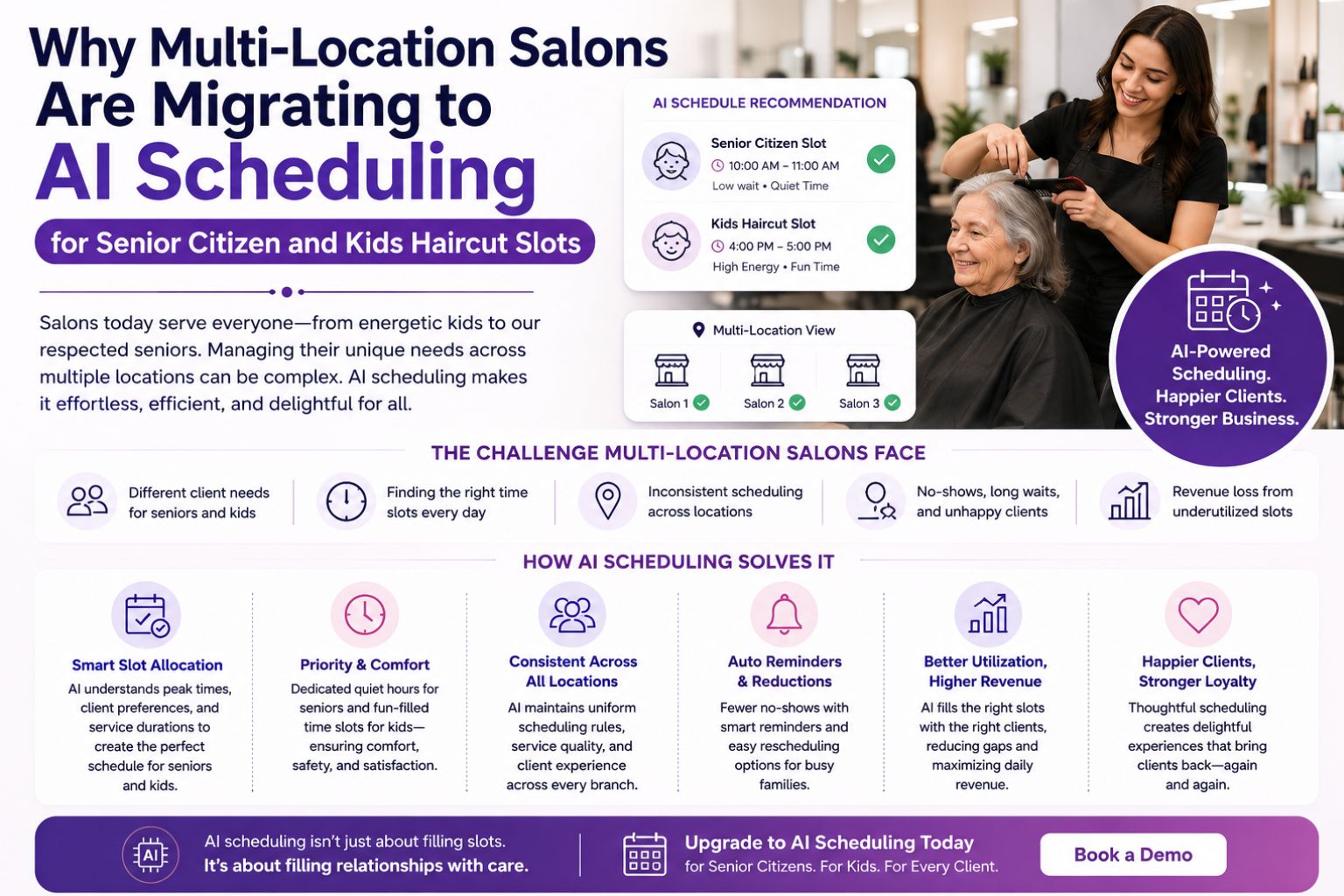


Multi-location salons are increasingly adopting AI scheduling specifically to manage the growing demand for senior citizen and kids haircut slots, because traditional booking systems... honestly they just fail to reserve the right time for these clients, leading to long waits, cancellations, and frustration for both the customer and the busy stylist who's already juggling multiple branches.
What This Scheduling Problem Means in Real Salon Visits
At a busy metropolitan salon chain, a grandmother booking a routine haircut often arrives only to be told the slot was misallocated to a walk-in bridal client, leaving her waiting for over an hour — and this is so common because most manual calendars just don't differentiate between a quick kids cut and a full color treatment, causing constant double-booking during peak hours, and nobody notices until it's too late.
What Actually Happens on Indian Skin and Hair During These Conflicts
When a child's slot overlaps with a senior's appointment, the stylist rushes through both services, often skipping the gentle scalp massage needed for senior hair thinning or the precise layering required for a child's fine hair, and many salons do not account for the extra time senior clients need to settle into the chair due to back stiffness — the result is a patchy haircut that leads to real dissatisfaction, and honestly who can blame them.
The Wrong Assumption About Service Capacity and Blind Spots
A major oversight is that salons assume all haircuts take the same time, but a senior citizen with arthritis may need a slower, more careful wash and drying process, while a toddler requires frequent breaks and distraction — services that AI scheduling can automatically block out longer durations for, but manual systems just fail to flag this, causing a stressful cascade of delays across multiple locations that nobody seems to plan for.
How Customers Decide on Timing and Next Steps for Booking
Parents and adult children caring for elderly relatives now search specifically for salons that offer "senior priority slots" or "kids quiet hour," and they are far more likely to remain loyal to a chain that uses AI scheduling to guarantee a calm, unhurried experience; parlourtime's data shows salons using AI for slot management see a 40% drop in no-shows for these age groups because the system respects service dependency — like needing a gentle shampoo before a cut, something a rushed manual booking would completely overlook.
FAQ
q: Does AI scheduling really solve the issue of senior citizens waiting too long for a haircut?
a: Yes, because it reserves longer, low-traffic time blocks specifically for seniors, ensuring they are never rushed and the stylist is fully available, preventing the common frustration of a rushed service that leaves everyone unhappy.
q: Can AI scheduling handle the unpredictable behavior of children during a haircut?
a: It can allocate buffer time between appointments and pair each child's booking with a familiar stylist who has experience with kids, reducing anxiety and the risk of an incomplete cut — honestly it's such a relief for parents.
q: What happens if a salon chain with multiple locations tries to use a manual book for these slots?
a: Manual books often cause double-booking when staff at different branches update the same schedule differently, leading to a parent arriving with a child only to be turned away, which directly hurts the salon's reputation and makes people not want to come back.
q: Is there a smarter way for multi-location salons to manage their appointment flow for these clients?
a: Using a centralized AI scheduler that understands service timing, like parlourtime, allows a salon to set clear boundaries, such as no kids cuts after 7 PM or limited senior slots on weekends, which reduces anxiety and improves client retention — it just makes sense.