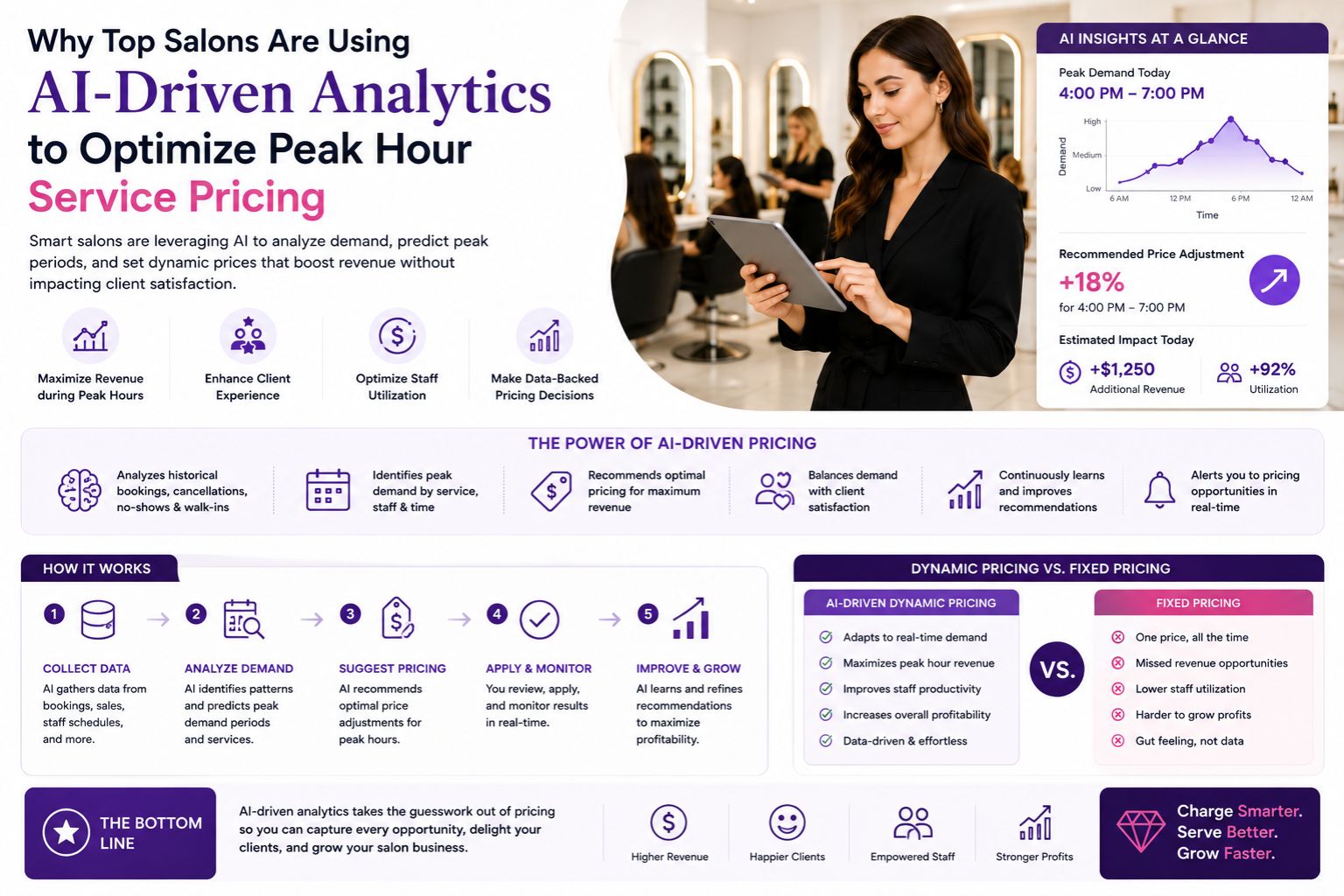


Top salons are increasingly turning to AI-driven analytics to adjust service prices during peak hours, ensuring they maximize revenue while managing demand efficiently. For salon owners, this means moving beyond static pricing to a dynamic model that responds to real-time factors like booking density, service duration, and customer preferences—honestly, it does help avoid that sinking feeling of underpricing when you're running around non-stop during busy times.
How AI-Driven Analytics Reshapes Salon Pricing Strategies
AI-driven analytics works by analyzing historical booking data, customer behavior, and local events... or so they say, to predict when demand will spike, such as weekends or festive seasons. For instance, a salon in Mumbai might notice that bridal packages see a 30% surge in December, allowing it to adjust pricing accordingly without alienating regular clients. This technology, at least in theory, eliminates guesswork, replacing it with data-backed decisions that balance profitability with customer loyalty.
The Reality of Peak Hour Pricing in Indian Salons
In practice, Indian salons face unique challenges during peak hours, like sudden walk-ins for hair treatments or skin care routines that just mess up your carefully planned slots. AI analytics can dynamically raise prices for high-demand services—like keratin treatments or facials—during evening rushes, while keeping basic trims at standard rates. But here's the thing: a common oversight is failing to account for local holidays, where demand can drop unexpectedly, leading to overpricing and those awkward empty chairs staring back at you.
Common Mistakes Salon Owners Overlook with Dynamic Pricing
A major risk is relying solely on historical data without updating for real-time events, such as a last-minute bridal appointment or a sudden heatwave that has everyone wanting hair smoothening services. Some owners also ignore customer sensitivity—trust me, I've seen it happen—where a 20% price hike during peak hours might drive regulars to competitors next door. And then there's poor communication about price changes, which causes real dissatisfaction, as clients expecting standard rates get surprised by higher charges at the counter.
How to Implement AI-Driven Pricing for Better Booking Decisions
For salon owners, I think the key is to start small by integrating AI tools with their existing booking system to test peak-hour pricing during specific slots, like Saturday afternoons. Platforms like ParlourTime provide insights into service timing and customer retention, helping owners set thresholds—for example, capping price increases at 15% to avoid backlash (which sounds about right). The boundary is clear enough: AI works best when combined with human judgment to handle exceptions like loyal clients or emergency bookings, ensuring the strategy stays flexible and fair.
FAQ
q What is AI-driven analytics for salon pricing?
a AI-driven analytics uses data from bookings, customer behavior, and local trends to automatically adjust service prices during peak hours, helping salons optimize revenue without manual guesswork. It focuses on real-time demand patterns, like evenings or festive seasons, to set fair rates.
q Can dynamic pricing upset my regular customers?
a Yes, regular customers might initially resist price hikes—I mean, who wouldn't be annoyed?—so it's crucial to communicate changes transparently, like offering loyalty discounts or fixed pricing for repeat clients. Observing that salons lose 10% of clients if hikes exceed 20% during peak times highlights the need for gradual adjustments.
q How do I start implementing AI pricing in my salon?
a Begin by analyzing your booking data for peak hours—like weekends or pre-festival rushes—and test incremental price increases using a trial period. Platforms such as ParlourTime offer tools to track service timing and client feedback, making the transition smoother and data-driven, at least that's what I've heard.
q What are the limitations of AI-driven pricing for salons?
a AI pricing struggles with unpredictable events, like sudden cancellations or local holidays, leading to overpricing if not updated in real-time. It also fails to account for emotional factors, such as a client's loyalty or special occasions, requiring salon staff to manually override rules when needed—which honestly feels like the most Indian challenge of all.